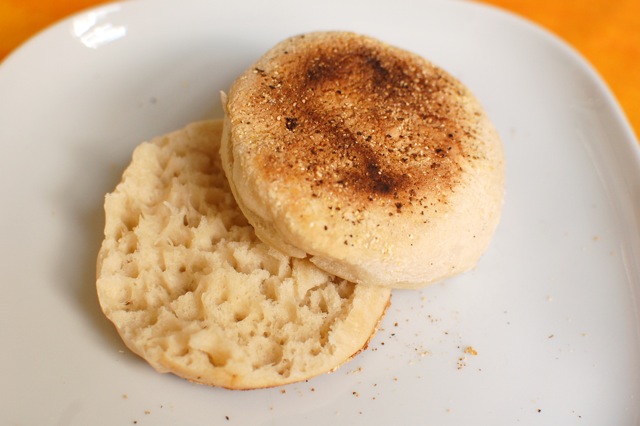
Sourdough English Muffins

They were pretty damn good, I must say. Toasting one right now….

Here’s a recipe, or as close as possible since I was free-styling it that morning.

SOURDOUGH SPONGE
The night before, take out of the fridge your sourdough starter (see my feature “Taming the Wild Yeast“). Transfer to a clean bowl and mix in the hootch (dark liquid on top) if you like more assertive sourdough flavors; pour off the hootch if you don’t. You’ll need about 1 cup of starter. Stir in about 2 cups of unbleached AP flour and 1 cup tepid, filtered water. Covered with a cloth and let ferment overnight.

Read more »


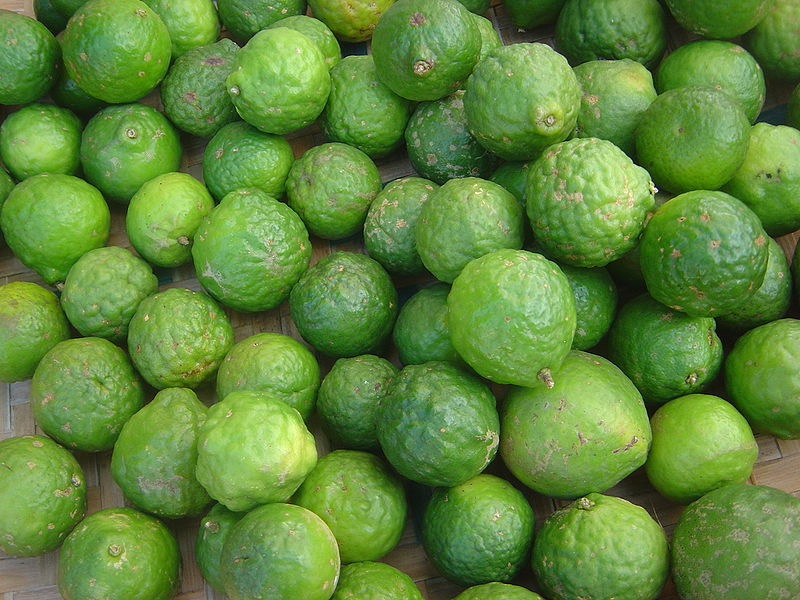
Makrut Limes – aka “Kaffir” Limes

Citrus hystrix dsc07772.jpg
Photo by David Monniaux

…a bit of trivia, a discussion I go through with many cookbook editors as I try to massage our language:

“Kaffir” was, historically, a word used in South Africa to refer to dark-skinned peoples. It differentiated the SE Asian limes grown in Indonesia (where the native Austronesian tribes had dark skin and curly hair) from the juicy and smooth-skinned Persian limes familiar to Europeans.

Word origins: http://dictionary.reference.com/browse/kaffir

It’s now considered extremely derogatory, a term that is outlawed, in fact, in several other countries. Users can be prosecuted in court for what we know here as hate speech.

I try to encourage my colleagues and students to use the name “makrut” or “magrut” lime. Obviously, we still have a ways to go, as our whole food industry in the west has absorbed the term without knowing its political background. I often put it in parenthesis, to clarify for readers, but have been working hard to weed it from our cookbooks.

And, as you can tell, continue my Quixotic, linguistic crusade….

Thy


Wok Rings and Electric Stoves


S. writes:

…how [does] one uses a wok in the contemporary kitchen (its called the science of the wok). I’m wondering, do you use a wok or a ring for your burner? I read a review on cooks illustrated that basically concluded that the wok doesn’t make sense on a standard (flat) kitchen burner. The shape seems more to me about the distribution of fats and the ability to have different zones of heat.

Any thoughts are much appreciated!

S

Hi S,

Oh goodness, I’m not sure I want to take on the folks over at Cooks Illustrated! For all his curmudgeonly geekiness, Christopher Kimball is very thorough in his obsessive testing and retesting.

But since you asked…

So many factors: Gas or electric burner? Northern Chinese wok (deeper in its curve) or southern style (wider, flatter, shallower) or even perhaps an Indian cast iron karahi? Just playing around with a few snow peas or attempting pad thai? Cooking for one or feeding a family? Just trying to be healthy or trying to impress your in-laws visiting from Hong Kong?

Purists will insist on only round bottomed woks over a very hot gas flame in a special wok burner that lets the pan sit very low and close to the flame (and NOT the same thing as a wok ring that you place over the burner — which just lowers the heat even more.)

Just for the record: regular home burners have maybe 10,000-15,000 BTU, a fancy Viking stove maybe 30,000 BTU. A restaurant’s wok burner can have 100,000 to 200,000 BTU. You will never ever get the same wok hay at home, as you will never ever create the same intensity of heat that instantly sears food on their surface while retaining moisture and tenderness inside.

But let’s say that the Kitchen God has cursed you with the sensibility of a purist and the reality of an electric coil. You can invest in a good (gasp!) flat-bottomed wok to maximize contact with the heating element. It’s the only — and I do mean ONLY — reason to use a flat-bottomed wok. However, there is NO reason for a non-stick wok.

For my day to day cooking, I use a northern-style pow wok made of carbon steel that has nearly 20 years of good seasoning. It’s jet black and virtually nonstick. More importantly, I do not use a ring but rather set the wok right down on my gas burner to obtain as high heat on the metal as possible. Cantonese-style woks, however, tend to be more difficult to use and require even greater levels of heat. If you must use one of those extra wok rings, then flip it upside down so that its wider taper is at the top, thus allowing the wok to sit lower.

Just for the record: lots of people have the right equipment but overload their wok (steaming instead of stir-frying), cut their vegetables wrong (not enough surface area or uneven pieces) and don’t have everything ready before they turn on the heat (thus compromising the elusive magic of brow-burning high heat and frenetic high speed).

A few years ago, wok burners became one of those things increasingly appearing in “prosumer” kitchens along with the gleaming stainless steel appliances, dishwasher drawers and stupid extra faucet by the stove. High-end kitchen designers here in Northern CA often include them in their plans. Scroll down these trendy appliances to see the stove with a wok ring in the center.

Serious DIY cooks who have a flair for the authentic will buy a free-standing wok burner and rig up a wok in the back yard. The burner’s intense flame combined with the lower-sitting wok means they can stir-fry like real men. Yes, it’s men that tend to do this. Most women I know are fine with adapting to Western stoves. Often, a really wide and heavy cast iron skillet is a better bet for the high heat stirring and ease of mixing that some recipes require. Think of one of those lovely pans that are used in the south for fried chicken. It’s certainly cheaper. That’s what my mom’s been using since I was a kid, and she makes really good food.

Not sure any of this helps, but well…ask me a question and who knows what you unleash!

Thy

PS I just reread “distribution of fats and different zones of heat.” The first is a interesting point, but would not stop me from using a wok in my home kitchen, as I try to keep everything moving anyway. The latter is present in other types of pans, too. I teach my professional culinary students about the different heat zones in a skillet, Dutch oven and rondo.


Lunar New Year Sweet Rice Dumplings

201002272149.jpg

The Lunar New Year, or Tet as my peeps call it, brings with it many favorite dishes. Fatty pork and sugar dominate the holiday table, harking back to a time when ingredients fat and sweet were much more difficult to obtain, precious to use, and delightfully rare to enjoy.

While I can now buy a 10-pound bag of sugar and an equal amount of meat for less money than a couple of movie tickets, the most traditional new year’s dishes are still special for one resource that does remain valuable: time.

Read more »


Saul’s Seltzer Saga — Save The Deli

sauls seltzerIf you’re reading David Sax’s recent book, Save the Deli, or follow his blog or moan, as many do, about the general state of the Jewish delicatessen, then you know that it’s a pivotal time in this most hallowed bastion of comfort food.

For years, locavores and vegetarians, calorie-counting suburbanites and couscous-loving Sephardim and even heeb-hopping hipsters have been bringing their own favorite dishes to the Jewish table. You might not know this upon stepping into a deli, where piles of salty, fatty meat and schmaltz in the chopped liver and never-ending free pickles every day of the year define good eating. It’s supposed to be a carefree zone where all the generations and sects can enjoy some chicken soup in relative peace.

Read more »


“How did they ever manage this?”

Joshua writes:

My dad just got back from Beijing. At one restaurant, they brought out a live fish in a bucket for inspection, and upon his OK returned 10 minutes later with this. The elongated cheese-it looking things all over the fish were some kind of fried dough and the fish meat, maybe, he couldn’t tell, but it was very good. He’s trying to figure out what this dish is. Have you ever seen anything like it?

Hi Joshua,

That’s a classic dish that’s supposed to resemble a pine cone (whole fish) or chrysanthemum blossoms (smaller filleted pieces). It’s usually just translated as “deep-fried fish in pine cone/chrysanthemum shape.” It maximizes crunch while making it very easy to eat with chopsticks. There’s also something to be said for the dramatic presentation.

I can’t tell from the photo, but classically, it’s a flaky white-fleshed fish. Grouper is a favorite, an expensive delicacy in Asia. In English, the fish needs to be “round” — so no flounder or halibut.

The two fillets are removed from the back bone, and the flesh is cross-hatched down to the skin (much like mangoes that have that porcupine-like cube-spiked halves). The fish fillets are battered (egg, chicken stock, water caltrop starch), dusted generously with more caltrop starch and then deep-fried. The skin turns inside out as each “petal” fries up. The head and spine are fried, and then the whole fish is reassembled, albeit the fillets are backward, with the skin-side down.

To complement the crispy fried texture, the sauce is usually a sweet-and-sour one based on tomato ketchup, sugar, vinegar, lime and maybe preserved plums or dried haw fruit. It’s simmered separately and then drizzled over the fish just before serving.

In China and Vietnam, you’ll also see this cross-hatch pattern on squid, especially for wedding or new year banquets. Pain in the ass to do every single little piece, but the dishes always look stunning.

Thy